
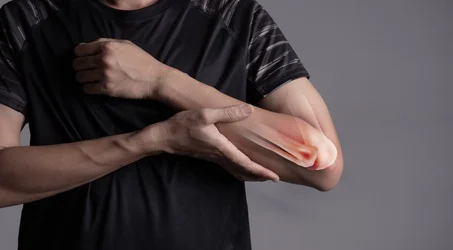
Tennis Elbow (Lateral Epicondylitis) and Golfer’s Elbow (Medial Epicondylitis) are common overuse injuries that cause pain and inflammation where the tendons of the forearm attach to the elbow. Despite their names, these conditions affect not only athletes but anyone who performs repetitive gripping, lifting, or wrist movements—such as tradespeople, office workers, and weightlifters.
At Resilience Orthopedics, we offer targeted, non-surgical solutions to reduce pain, support tendon healing, and restore function—without the long wait times or high costs of traditional care.
What Causes Tennis & Golfer’s Elbow?
These conditions develop due to micro-tears and degeneration in the tendons from repetitive stress or poor movement mechanics.
- Tennis Elbow affects the outer (lateral) elbow and is typically caused by overuse of the wrist extensor muscles.
- Golfer’s Elbow affects the inner (medial) elbow and results from overuse of the wrist flexor muscles.
Common Causes:
- Repetitive motions (typing, using tools, lifting weights)
- Poor ergonomics or sports technique
- Sudden increases in activity without proper conditioning
How We Treat It
Shockwave Therapy
Shockwave therapy uses acoustic waves to:
- Stimulate blood flow to damaged tendons
- Break up scar tissue and calcification
- Accelerate the natural healing response
t’s especially effective for chronic cases that haven’t responded to rest, bracing, or physical therapy.
Focal Cryotherapy
Focal cryotherapy delivers deep, targeted cold to:
- Reduce pain and inflammation
- Relieve muscle tension in the forearm
- Improve comfort during rehabilitation
It’s ideal for calming flare-ups and managing symptoms alongside tendon rehab.
Supportive Tools: The Role of a Forearm Strap (Counterforce Brace)
A forearm strap, also called a counterforce brace, is a simple but effective tool that can provide meaningful relief during recovery from tennis or golfer’s elbow.
How It Works:
The strap is worn around the upper forearm, just below the elbow. It applies gentle pressure to the muscle belly of the forearm, which:
- Reduces strain on the injured tendon at the elbow
- Disperses load away from the tendon attachment site
- Provides pain relief during gripping, lifting, or repetitive use
When to Use It:
- During activities that aggravate your elbow pain (e.g., work tasks, workouts, household chores)
- As part of a conservative treatment plan, alongside shockwave therapy, focal cryotherapy, and rehab exercises
- Not typically worn at rest or while sleeping
How to Use It Properly:
- Position the strap about 1–2 inches (2–3 finger-widths) below the elbow joint.
- Tighten the strap firmly enough to apply pressure, but not so tight that it restricts blood flow or causes numbness.
- Use it during activity only remove after use to avoid muscle dependence or circulation issues.
⚠️ Note: A forearm strap is not a cure—but it can improve comfort and function while the tendon heals. For long-term results, it should be used in combination with proper treatment and rehabilitation.
What Patients Should Know
Recovery from tennis or golfer’s elbow takes time and consistency. These conditions are slow to heal due to poor blood flow in the affected tendons. While many patients experience relief within a few weeks of treatment, full recovery may take 3–6 months or longer, depending on severity and compliance with rehab.
Patient Education: What to Avoid
- Repetitive gripping, lifting, or twisting motions (e.g., heavy tools, dumbbells)
- Poor posture and ergonomics at work or during exercise
- Ignoring pain or "pushing through" flare-ups
Home Exercises to Support Recovery
(Perform under guidance or when pain is tolerable)
-
Eccentric Wrist Extensions/Flexions
Slow lowering of a light dumbbell to rebuild tendon strength. -
Forearm Stretching
Gentle stretches to improve flexibility in flexors and extensors. -
Grip Strengthening with Putty or Soft Ball
Helps rebuild endurance and coordination without overloading. -
Wrist Isometrics
Press against resistance without movement to activate muscles safely.
Affordable, Attainable Relief
You don’t need to wait for insurance approvals or referrals to begin healing. Our self-pay model makes advanced orthopedic care both affordable and accessible—delivered when your body needs it most.
Take control of your recovery. Schedule your consultation today and get back to the activities you enjoy—pain-free, with strength and confidence.